


📋 Content Verification
Written by: OPTIMOVE TEAM
Clinical Review: Dr Muhammad Tuseef
Specialisation: Advanced clinical practice
Published: April 2026
Last Reviewed: April 2026
Next Review: October 2026
This guide explores the most common causes of knee pain, with expert insight from our physiotherapists on diagnosis, recovery, and when to seek help.
Knee pain is one of the most common musculoskeletal complaints we see in clinic, affecting people of all ages and activity levels — from runners and gym-goers to office workers and older adults. The key thing to understand is that knee pain isn’t a diagnosis — it’s a symptom. And the cause matters, because the right treatment depends entirely on what’s driving it. If you’re currently searching for knee pain treatment in London, understanding the root cause is the first step towards recovery.
The Most Common Causes of Knee Pain
Patellofemoral Pain Syndrome (Runner’s Knee)
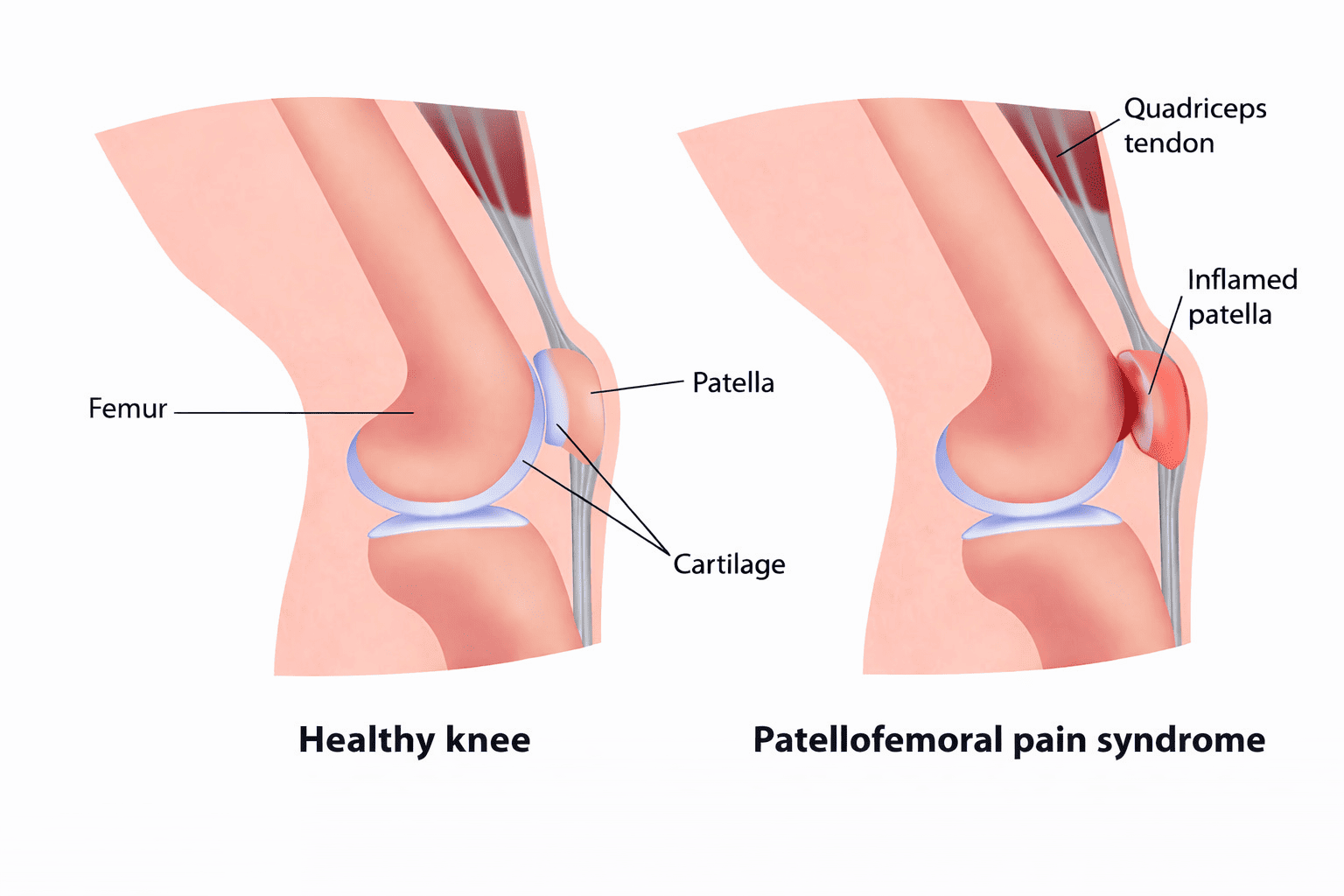
Patellofemoral pain syndrome — commonly known as runner’s knee — causes pain around or behind the kneecap. It’s particularly common in runners, cyclists, and people who sit for long periods. This type of pain is usually linked to how the kneecap tracks over the femur. Weak hip abductors, tight quadriceps, and poor movement patterns can all contribute to this imbalance.
If this sounds familiar, we’ve covered it in full detail in our guide to runner’s knee.
Knee Pain When Bending (Flexion-Related Pain)
Pain that occurs when bending the knee — such as going downstairs, squatting, or sitting — is extremely common. This type of pain can be caused by several structures, including the patellofemoral joint, the meniscus, or tight surrounding tissues. The exact cause often depends on how the pain behaves and what movements aggravate it.
You can read a more detailed breakdown in our article on knee pain when bending.
Ligament Injuries (ACL, MCL, LCL)
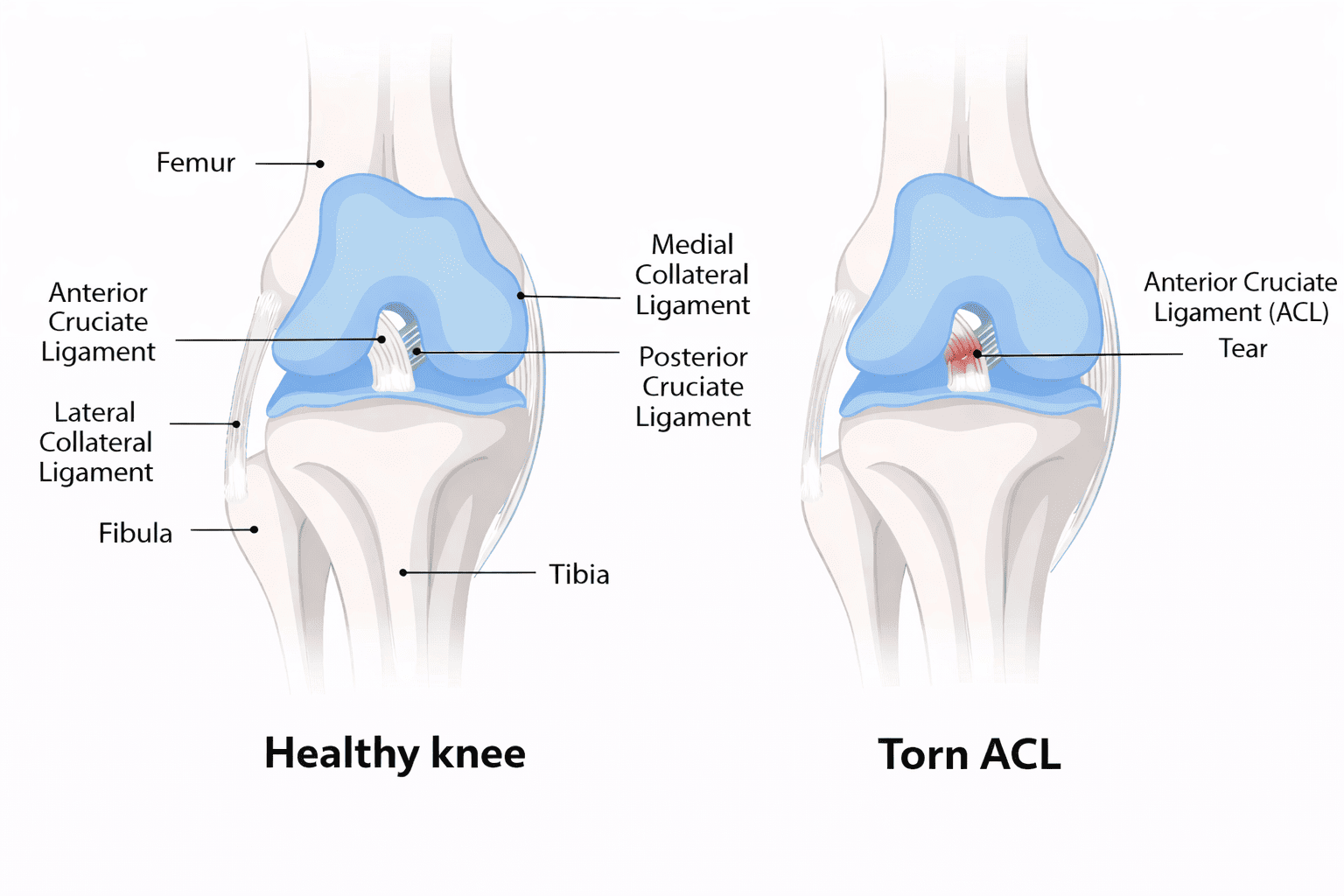
The knee is stabilised by four main ligaments. Ligament injuries typically occur during sports or activities that involve sudden changes in direction, twisting, or direct impact.
The four main ligaments:
- ACL (Anterior Cruciate Ligament)
- PCL (Posterior Cruciate Ligament)
- MCL (Medial Collateral Ligament)
- LCL (Lateral Collateral Ligament)
Typical symptoms:
- Pain and swelling
- Instability or a feeling that the knee might “give way”
- Difficulty bearing weight
These injuries range from mild sprains to complete tears and often require structured rehabilitation.
Meniscus Tears
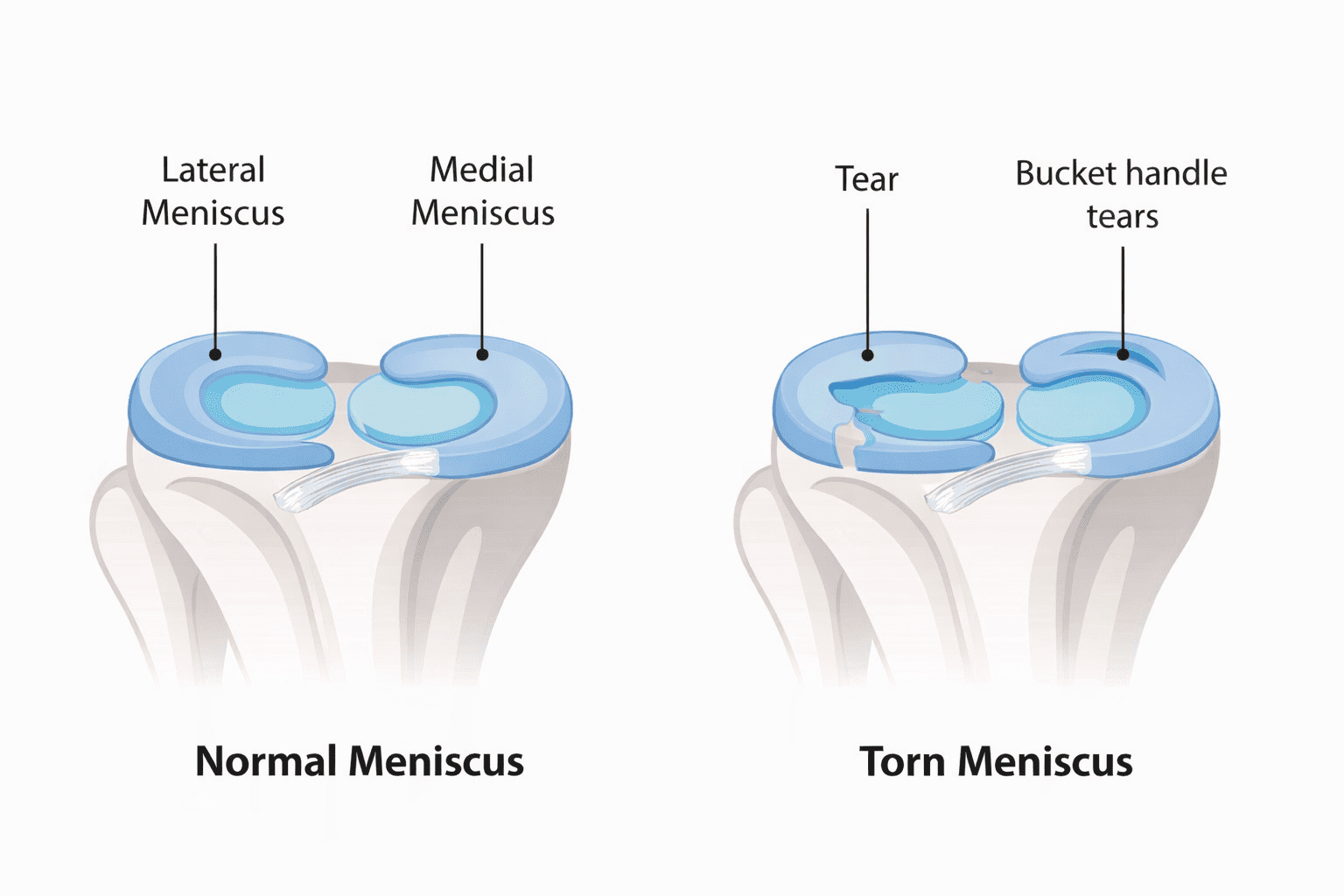
The meniscus is a piece of cartilage that acts as a shock absorber between the thigh bone and shin bone.
Two main types of tear:
- Acute tears — often from twisting movements during sport
- Degenerative tears — more common as we age
Typical symptoms:
- Pain when twisting or squatting
- Clicking or locking sensations
- Swelling and stiffness
Important: Not all meniscus tears require surgery — many respond very well to physiotherapy.
Osteoarthritis of the Knee
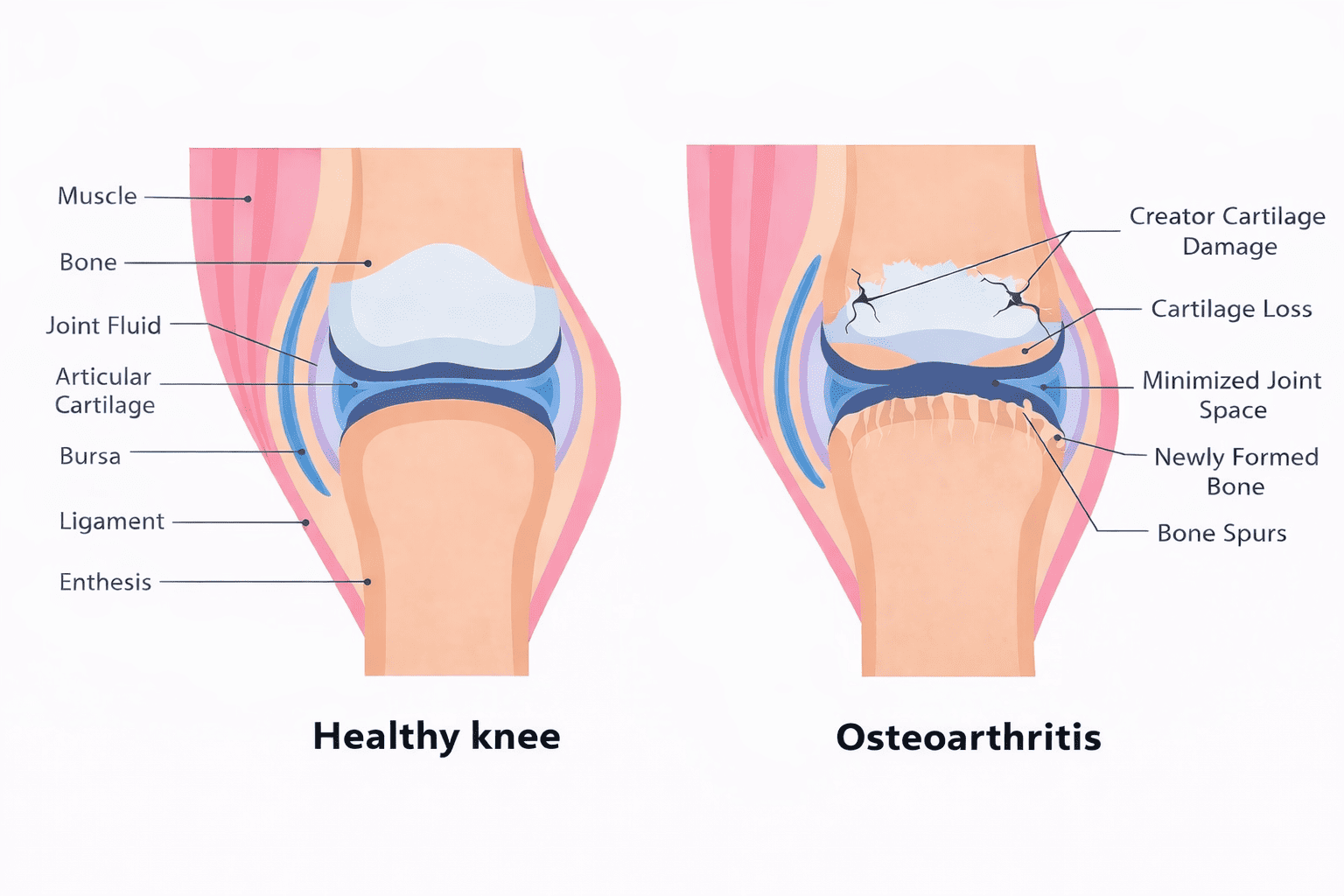
Knee osteoarthritis is one of the most common causes of knee pain, particularly in adults over 45. It involves gradual wear of the joint cartilage, leading to stiffness, swelling, and pain during movement.
Important: Osteoarthritis does not mean inevitable decline. Exercise and physiotherapy are the first-line treatments and can significantly improve pain and function. According to Versus Arthritis knee pain guidance, staying active is one of the most effective ways to manage symptoms.
Tendinopathy (Patellar and Quadriceps Tendon)
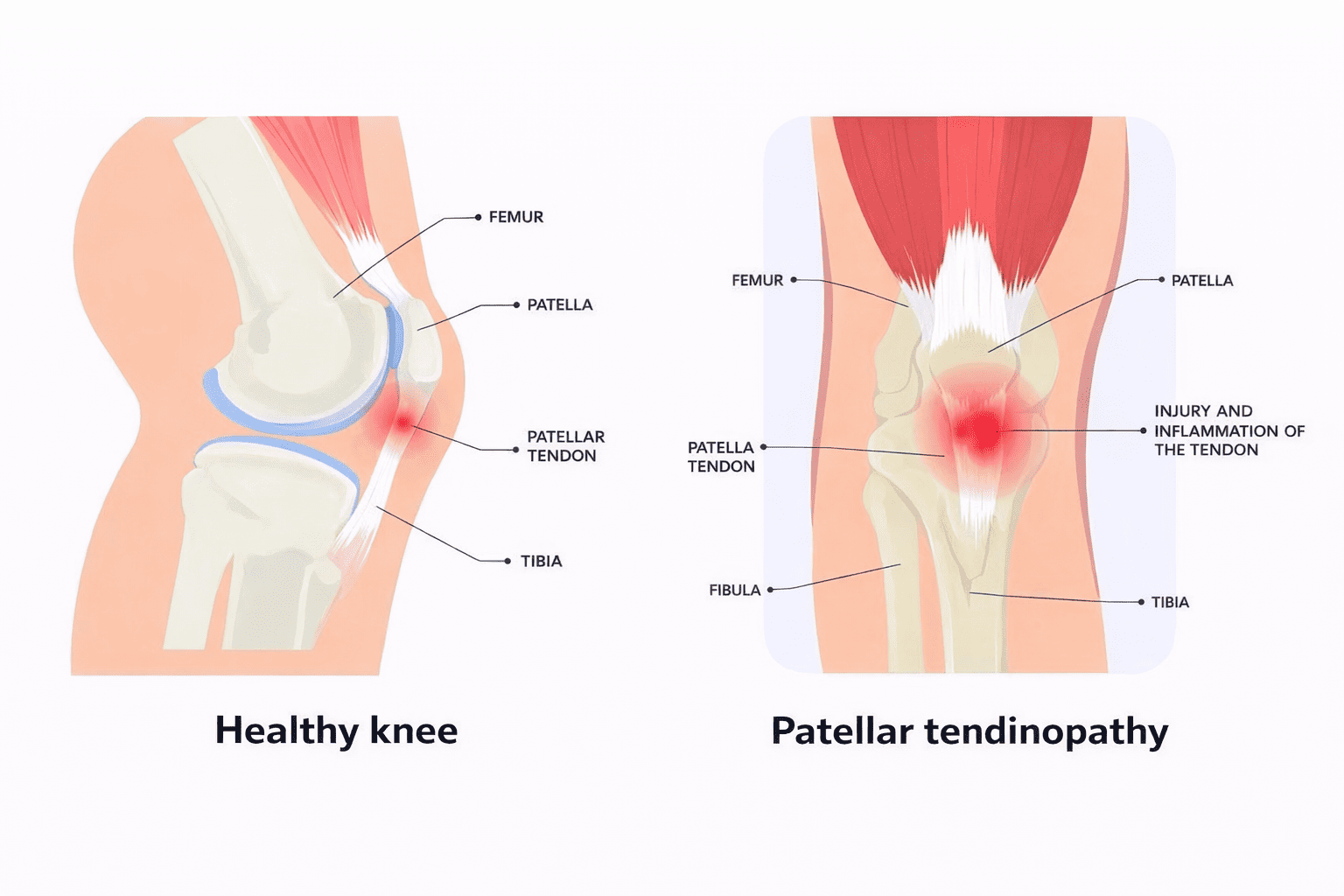
Tendinopathy refers to irritation or overload of the tendons around the knee — most commonly the patellar tendon.
Often seen in:
- Runners
- Jumping sports (e.g. basketball, volleyball)
- Weightlifting
How it presents:
Pain typically develops gradually and is felt at the front of the knee, especially during or after activity. Tendinopathy responds very well to progressive loading programmes when managed correctly.
IT Band Syndrome
IT band syndrome causes pain on the outside of the knee and is particularly common in runners and cyclists. The iliotibial band runs down the outside of the thigh and can become tight, leading to friction at the knee.
Common contributing factors:
- Sudden increases in training load
- Weak hip muscles
- Running on sloped surfaces
Bursitis
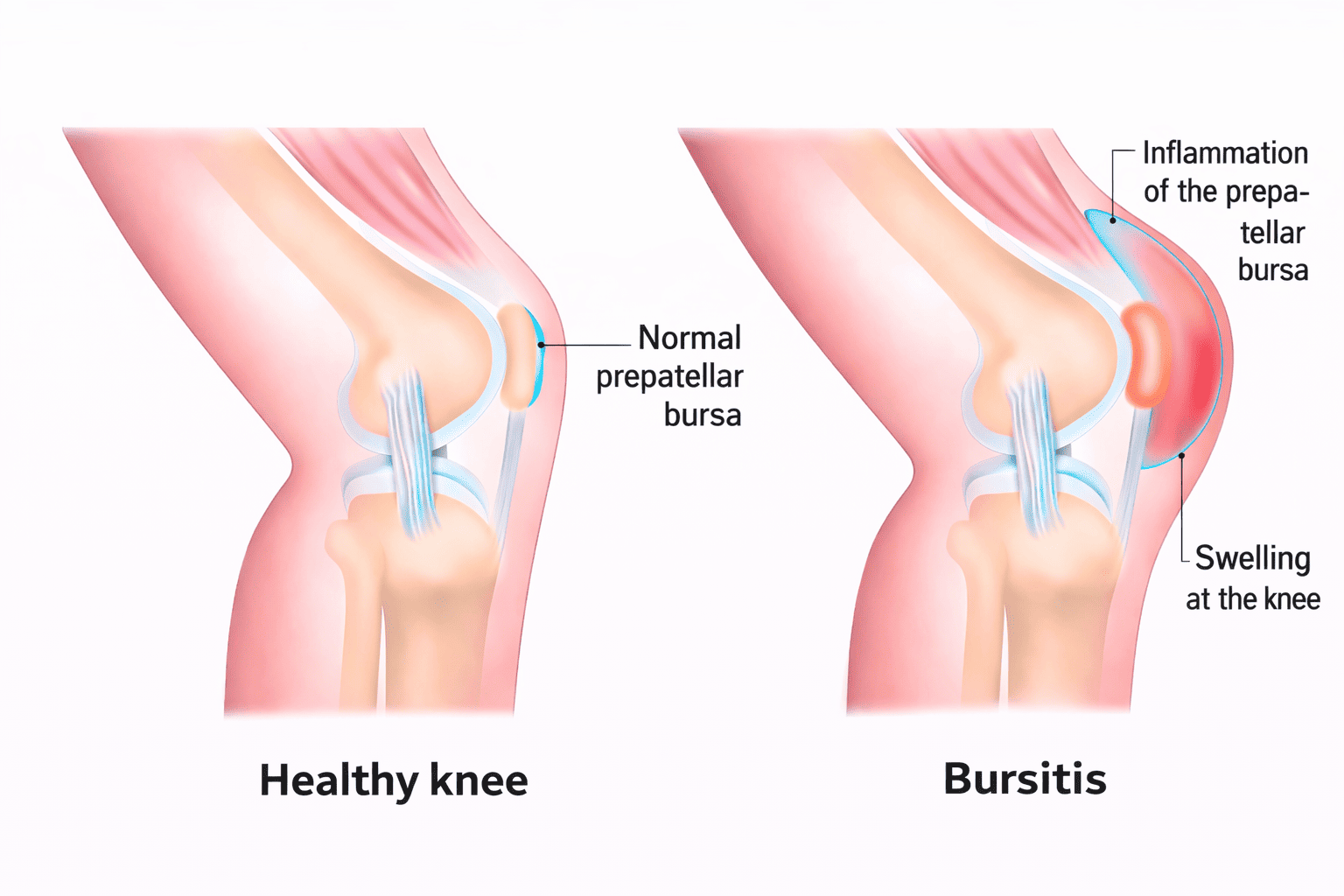
Bursae are small fluid-filled sacs that help reduce friction in joints. When they become irritated or inflamed, bursitis develops — causing localised swelling, warmth, and tenderness.
Commonly caused by:
- Repetitive kneeling
- Direct pressure or impact
- Trauma to the joint
Red Flag Symptoms: When to Seek Urgent Help
While most knee pain is not serious, there are certain symptoms that require prompt medical attention.
⚠️ Seek urgent help if you experience:
- Significant swelling immediately after an injury
- Inability to bear weight on the leg
- The knee giving way or locking completely
- A hot, swollen joint with fever (possible infection)
- Severe pain following a traumatic impact
If any of these apply, seek medical attention as soon as possible.
How Does Physiotherapy Assess Knee Pain?
A proper assessment is the most important step in treating knee pain effectively. Not all knee pain is treated the same way — the diagnosis determines the treatment.
At Optimove Clinic, our assessment typically includes:
- A detailed history — how the pain started, what makes it better or worse
- Movement assessment — range of motion and functional tests
- Strength testing — quadriceps, hamstrings, and hip muscles
- Hands-on examination and special clinical tests
- Biomechanical analysis of movement patterns
How Long Does Knee Pain Last?
Recovery time depends entirely on the cause.
- Muscle strains: a few days to a few weeks
- Tendinopathy: typically 6–12 weeks with proper loading
- Ligament sprains: 4–12 weeks depending on severity
- Osteoarthritis: ongoing management, but significant improvement is possible
Sleep can also play a significant role in recovery. If pain is affecting your rest, see our guide on how to sleep with knee pain.
Can Knee Pain Be Prevented?
In many cases, yes. Simple strategies can significantly reduce your risk.
💡 Clinical Insight: Prevention is largely about load management — giving your body time to adapt to new demands rather than avoiding activity altogether.
Key prevention strategies:
- Increase activity levels gradually
- Strengthen the hips and glutes
- Maintain a healthy weight
- Wear appropriate footwear
- Include proper warm-ups and cool-downs
Knee Pain Treatment at Our Marylebone Clinic
Searching for knee pain treatment near you in Central London? At Optimove Clinic in Marylebone, we provide specialist knee pain treatment in Marylebone tailored to your specific condition.
Our approach focuses on:
- Accurate diagnosis of the root cause
- Hands-on treatment where appropriate
- Structured, progressive rehabilitation programmes
- Long-term prevention strategies
Whether your pain is recent or something you’ve been managing for months, the goal is the same — to get you moving confidently again. Get in touch today to start your recovery.
📌 Key Takeaways
- Knee pain is a symptom, not a diagnosis — the underlying cause determines the treatment
- Common causes include patellofemoral syndrome, meniscus tears, ligament injuries, and osteoarthritis
- Red flag symptoms such as inability to bear weight or a locked knee require urgent attention
- Physiotherapy assessment identifies the root cause through movement, strength, and biomechanical testing
- Most knee conditions respond well to conservative treatment and structured rehabilitation
Disclaimer
This article is for informational purposes only and is not a substitute for professional medical advice. Consult a qualified healthcare provider for personalised guidance on knee pain treatment.