


📋 Content Verification
Written by: OPTIMOVE TEAM
Clinical Review: Dr Muhammad Tuseef
Specialisation: Advanced clinical practice
Published: February 2026
Last Reviewed: February 2026
Next Review: June 2026
This article provides evidence-based guidance for common causes of knee pain during bending movements.
Introduction
Knee pain when bending is one of the most common complaints seen in physiotherapy clinics. Many people notice discomfort when squatting, kneeling, using stairs, or sitting with the knee bent for prolonged periods. For some, the pain is mild and short-lived. For others, it becomes persistent and begins to interfere with daily activities, work, or exercise.
💡 Clinical Insight: Knee pain during bending is not a diagnosis. It is a symptom pattern that can arise from multiple structures within or around the knee joint. Identifying the source of pain is essential for safe and effective management.
Understanding when knee pain can be managed safely at home—and when professional assessment is needed—helps avoid unnecessary worry while also preventing delayed diagnosis.
Why Bending Can Cause Knee Pain
Bending the knee places load through several structures at once. As the knee flexes, joint surfaces move, soft tissues stretch or compress, and pressure increases in specific areas.
What Happens When You Bend Your Knee
- The kneecap (patella) glides within its groove on the thigh bone
- Cartilage surfaces absorb increasing compressive forces
- The menisci help distribute load and stabilise the joint
- Tendons and ligaments control movement and tension
Important: Pain does not automatically mean damage. In many cases, knee pain during bending reflects irritated or sensitised tissue rather than structural injury. Distinguishing between normal stress and excessive stress is key.
Problems are more likely when one structure is overloaded, tissue capacity is reduced, movement control is altered, or swelling restricts normal motion.
Common Causes of Knee Pain When Bending
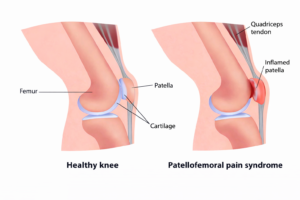
Patellofemoral Pain Syndrome (PFPS)
What It Is
Patellofemoral pain syndrome refers to pain arising from the kneecap and its interaction with the thigh bone. It is one of the most common causes of knee pain, particularly in active adults.
Why Bending Hurts
As the knee bends, pressure between the kneecap and thigh bone increases significantly. Reduced load tolerance or joint sensitivity can trigger pain.
Typical Symptoms
- Pain at the front of the knee
- Discomfort going downstairs or squatting
- Aching after sitting with knees bent
- Usually minimal swelling
Who Gets It
- Runners and gym-goers
- People with sudden increases in activity
- Individuals with prolonged sitting exposure
Treatment Approach
Management focuses on corrective exercise, manual therapy, and progressive strengthening. Shoe orthotics may help individuals with flat feet or limited ankle mobility.
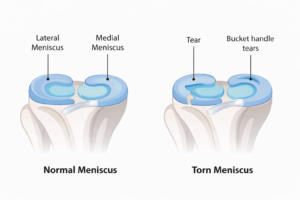
Meniscus Tears
What It Is
The menisci are cartilage structures that distribute load and improve knee stability. Tears may occur suddenly or develop gradually.
Why Bending Hurts
Deep knee bending compresses the meniscus. If irritated or torn, this compression can provoke pain or mechanical symptoms.
Typical Symptoms
- Joint line pain
- Swelling after activity
- Catching or locking sensations
- Feeling of instability
Treatment Approach
Many meniscus tears respond well to physiotherapy. Surgery is usually reserved for persistent mechanical symptoms or failure to improve with rehabilitation.
Patellar Tendinopathy

What It Is
An overload condition affecting the patellar tendon, which connects the kneecap to the shin.
Why Bending Hurts
Knee bending increases tendon tension, especially during squatting, jumping, or stair use.
Typical Symptoms
- Pain just below the kneecap
- Stiffness at the start of activity
- Pain that eases then returns later
Treatment Approach
Progressive tendon loading, strength training, and activity modification form the cornerstone of treatment.
Arthritis

What It Is
Age-related joint degeneration and cartilage thinning.
Why Bending Hurts
Reduced cartilage cushioning increases discomfort during compression.
Treatment Approach
Exercise, weight management, and load modification are more effective long-term than rest alone.
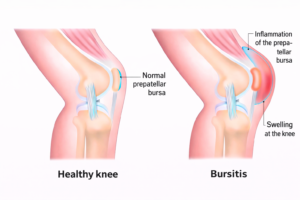
Bursitis
What It Is
Inflammation of small fluid-filled sacs that reduce friction.
Why Bending Hurts
Bending compresses the inflamed bursa, especially during kneeling.
Treatment Approach
Focuses on reducing irritation, modifying load, and restoring strength.
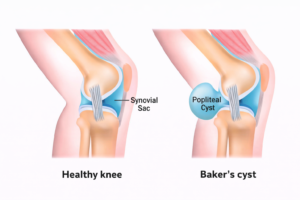
Baker’s Cyst
What It Is
A fluid-filled swelling behind the knee linked to joint irritation.
Why Bending Hurts
Deep bending increases pressure at the back of the knee.
Treatment Approach
Management targets the underlying joint irritation rather than the cyst itself.
Iliotibial (IT) Band Syndrome
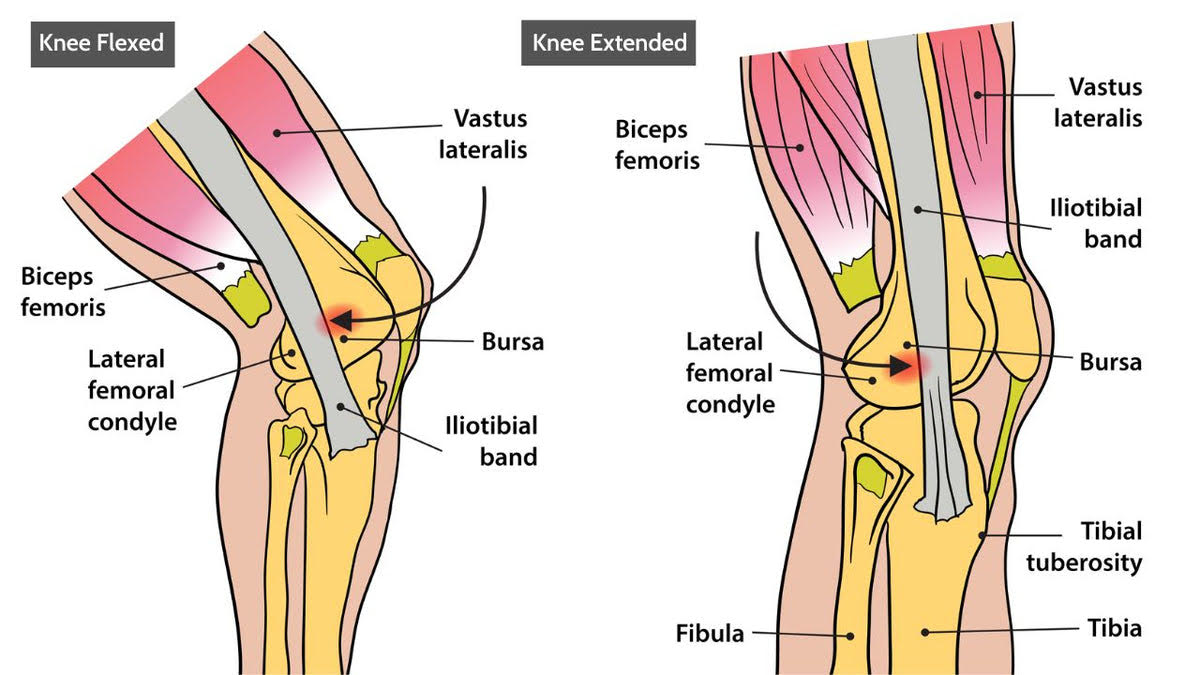
What It Is
IT band syndrome is an overuse injury that causes pain on the outside of the knee. The iliotibial band is a thick band of connective tissue that runs from the hip down the outside of the thigh to the knee. When it becomes tight or irritated, it rubs against the outer part of the knee joint, causing inflammation and pain.
Why Bending Hurts
When you bend and straighten your knee, especially around 20–30 degrees of flexion:
- The IT band moves back and forth over a bony bump on the outside of the femur (the lateral femoral epicondyle)
- If the band is tight or inflamed, this repeated friction causes pain
- Activities such as running downhill, squatting, or cycling increase this friction
Typical Symptoms
- Pain on the outer (lateral) side of the knee
- Pain that worsens with running, especially downhill
- Tenderness when pressing on the outside of the knee
- A clicking or snapping sensation
- Pain that improves with rest but returns with activity
Treatment Approach
Rest & Activity Modification: Reduce or temporarily stop painful activities, and avoid downhill running until symptoms settle.
Stretching: IT band stretches combined with hip flexor and gluteal stretches help reduce tissue tension.
Strengthening: Focus on the gluteus medius, hip abductors, and core muscles to reduce load through the IT band during activity.
Physical Therapy: Gait correction and addressing muscle imbalances are central to long-term recovery.
Ligament Injuries (Including ACL)

Why Bending Hurts
Bending combined with rotation or load increases stress on injured ligaments.
Treatment Approach
Many ligament injuries respond well to structured rehabilitation. Surgery is considered when instability persists.
Self-Assessment Guide for Knee Pain
If you are experiencing knee pain, asking yourself the right questions can help you understand whether it is likely a minor irritation or something that needs professional assessment.
Ask Yourself
1. Did the symptoms start suddenly or gradually?
- Sudden onset after a twist or impact may indicate a ligament, meniscus, or acute injury
- Gradual onset is more commonly linked to overuse conditions such as patellofemoral pain or IT band irritation
➡ If the pain followed trauma or you heard a “pop,” seek medical assessment.
2. Is the pain sharp, aching, or stiff?
- Sharp pain during movement may suggest tissue irritation
- A deep ache often relates to overuse
- Morning stiffness that improves with movement is commonly load-related
➡ Sharp or catching pain that blocks movement should be assessed professionally.
3. Does swelling appear after activity?
- Swelling within a few hours of activity suggests joint irritation
- Persistent or significant swelling may indicate internal joint involvement
➡ Recurrent swelling is a sign to consult a physiotherapist or healthcare provider.
4. Is the pain improving, worsening, or unchanged?
- Improving pain suggests the tissue is adapting
- Worsening pain or no change after 1–2 weeks may require structured rehabilitation
5. What area of the knee is painful?
- Front of the knee → often patellofemoral pain
- Outer knee → possible IT band involvement
- Inner knee → medial structures
- Deep inside → possible meniscus
➡ Location helps narrow down likely causes of knee pain.
6. What activities trigger the pain?
- Running downhill
- Squatting
- Stairs
- Prolonged sitting
➡ Identifying aggravating factors helps guide activity modification.
Simple Movement Check
Gentle knee bends, walking, or stair climbing can help identify movement patterns that increase symptoms.
⚠ Avoid forcing painful movements. Pain that increases sharply during testing is a sign to stop.
When Is Self-Management Appropriate?
Self-management is usually appropriate if:
- Pain is mild to moderate
- There is no significant swelling
- There was no major trauma
- Symptoms are gradually improving
Seek professional care if there is:
- Severe swelling
- Instability
- Locking or catching
- Inability to bear weight
Initial Treatment for Knee Pain
Early management should aim to reduce irritation while maintaining safe movement.
RICE Protocol (Short-Term Use)
- Rest – Relative rest, not complete inactivity
- Ice – 10–15 minutes for symptom relief
- Compression – Light support if swelling is present
- Elevation – Useful in cases of swelling
RICE is helpful in the first 48–72 hours but should not replace gradual rehabilitation.
Activity Modification
Temporarily reduce aggravating movements such as deep squats and high-impact activities. Avoid complete rest for extended periods, as this may delay recovery.
Safe Movements to Maintain Recovery
- Gentle range-of-motion exercises
- Walking within tolerance
- Controlled sit-to-stand movements
Movement supports circulation and tissue healing.
What to Avoid: Pushing through sharp pain, sudden increases in training load, and complete inactivity for more than a few days.
Exercises That Help Knee Pain
Rehabilitation exercises should match the stage of recovery.
Gentle Range of Motion (Early Stage)
- Assisted knee bends using a strap or towel
- Controlled seated or standing knee bends
The goal is to maintain joint mobility without increasing symptoms.
Strengthening (When Pain Allows)
Strength work improves long-term knee resilience. Focus on:
- Vastus Medialis Oblique (VMO) activation
- Glute muscles, especially gluteus medius
- Hip and core stability
Strengthening reduces stress on the knee joint during daily and sporting activities.
Stretching Considerations
Stretching should be gentle, symptom-guided, and targeted to muscles that are objectively tight. Aggressive stretching may worsen inflammation and delay recovery.
Prevention of Recurrent Knee Pain
Preventing knee pain recurrence requires consistent load management and strength maintenance.
- Warm up before activity
- Increase training load gradually — avoid sudden spikes
- Maintain lower limb strength
- Prioritise movement quality over speed or depth
💡 Clinical Insight: Consistency is more important than intensity. A sustainable, progressive approach to activity is the most effective long-term strategy for knee health.
When to Seek Medical Help
Seek professional assessment if:
- Pain follows a sudden injury
- The knee locks or gives way
- Swelling is significant or worsening
- Pain does not improve after 4–6 weeks
- Daily activities become difficult
⚠️ Urgent: Urgent medical attention is required if you experience severe pain, a red, hot or swollen joint, visible deformity, or inability to bear weight.
Conclusion
Knee pain when bending is common and usually treatable. Understanding the cause allows for safe, effective management and reduces unnecessary worry. Persistent or worsening symptoms should always be assessed professionally to ensure the best long-term outcome.