Up to 90% Success Rate

Elbow, Wrist & Hand Pain Treatment in London

Pain in the elbow, wrist, or hand can affect your ability to carry out everyday tasks such as lifting, typing, gripping, or exercising. These symptoms can be caused by injury, overuse, or underlying conditions.
Holistic Approach
We firmly believe in overall physical fitness as such we take a holistic approach to treating you. 
Hands-on Treatment
We are experienced in a range of manual techniques to immediate pain relief from your symptoms.
Dedicated to you
All our therapists will be dedicated to you throughout your session.

Understanding Elbow, Wrist & Hand Pain

The elbow, wrist, and hand are made up of complex joints, muscles, tendons, and nerves. Pain in these areas may come from overuse, repetitive strain, sudden injury, or conditions like arthritis or tendonitis. Because these joints are used constantly throughout the day, even minor problems can have a big impact on your quality of life.

Tennis elbow and golfer’s elbow respond particularly well to shockwave therapy, with most patients experiencing significant relief within 4-6 sessions. This non-invasive treatment promotes tendon healing without the need for injections or surgery.

Common Symptoms

  • Pain, stiffness, or swelling in the affected area
  • Weakness or reduced grip strength
  • Tingling or numbness (often linked to nerve irritation)
  • Reduced range of movement
  • Discomfort with lifting, gripping, or repetitive tasks

Causes

  • Overuse and repetitive strain – e.g., typing, lifting, or sports like tennis/golf
  • Injuries – sprains, fractures, or trauma
  • Tendinopathies – such as tennis elbow or golfer’s elbow
  • Arthritis and joint degeneration – leading to stiffness and pain
  • Postural and biomechanical issues – poor ergonomics or movement patterns increasing strain
  • Neck issues – for example a disc bulge, can compress nerves in the neck area, and this can radiate symptoms down the arm.

Treatment Options

  • Physiotherapy and exercise therapy – strengthening and mobility programmes to support recovery
  • Manual therapy and mobilisation – reducing stiffness and improving joint function
  • Supportive aids – such as splints, braces, or ergonomic advice to reduce strain
  • Injections – considered in persistent cases alongside physiotherapy

Prevention

  • Ergonomic advice – correct desk setup and posture to avoid repetitive strain
  • Strengthening and flexibility exercises – to protect joints and tendons
  • Gradual return to activity – avoiding overuse or sudden overload
  • Lifestyle management – maintaining healthy habits to reduce inflammation and stress on joints

Self Care for elbow, wrist and hand pain

  • Try to continue with your daily activities as much as possible.
  • Practice good posture to keep your body in the right position.
  • Set up your workstation ergonomically.
  • Exercise is an important cornerstone in both the prevention and treatment of elbow, wrist and hand pain but should be avoided for the first 48 to 72 hours. After this time frame, you could try some gentle exercises and gradually build up the intensity and volume over time. Avoid any exercise that seems to aggravate your symptoms.
  • Avoid hot baths, saunas, heat packs, massages and alcohol for the first 48 to 72 hours to control the inflammatory process and avoid swelling. After this time frame, heat could be helpful as it can promote healing.

Why Choose Our Clinic

  • Specialists in upper limb conditions – experienced in treating elbow, wrist, and hand injuries
  • Tailored care – individualised plans based on your pain, lifestyle, and recovery goals
  • Proven outcomes – helping patients return to work, sport, and daily activities with confidence
Get in touch

Book A Consultation For Only £90

or send us an enquiry

Content Verified By:

Dr Muhammad Tuseef, MSc, PT
Senior Practitioner — Advanced Physiotherapy
Last Reviewed: 1 October 2025
Next Review: 1 October 2026
About the Reviewer:
With 10+ years of clinical experience and treating approximately 3,000 patients annually, Dr Muhammad Tuseef is a Chartered Physiotherapist registered with the HCPC (PH133895) and a member of the Chartered Society of Physiotherapy. He holds a Bachelor’s in Doctor of Physiotherapy from The Superior College Lahore and an MSc in Advanced Physiotherapy Practice from Glasgow Caledonian University. His background includes NHS practice, and his approach is rooted in the belief that healing begins with movement — guided by knowledge and delivered through care.
Accredited by
hcpc

At Optimove Clinic, we take a different approach compared to other clinics. While they tend to “chase the pain” by focusing solely on treating the actively painful area, we take a holistic approach to pain management. We understand that pain in one area may be linked to dysfunction in another part of the body. By addressing the root cause of the pain, rather than just the symptoms, we can provide more effective and long-lasting relief.

Our method incorporates different techniques such as Manual Therapy, Corrective/Therapeutic Exercise, and Pilates, to alleviate pain and enhance athletic performance. We strive to assist individuals in reducing or eliminating discomfort while also supporting athletes in optimizing their abilities.

Harley Street's leading Musculoskeletal Therapy for treating Elbow, wrist and hand pain
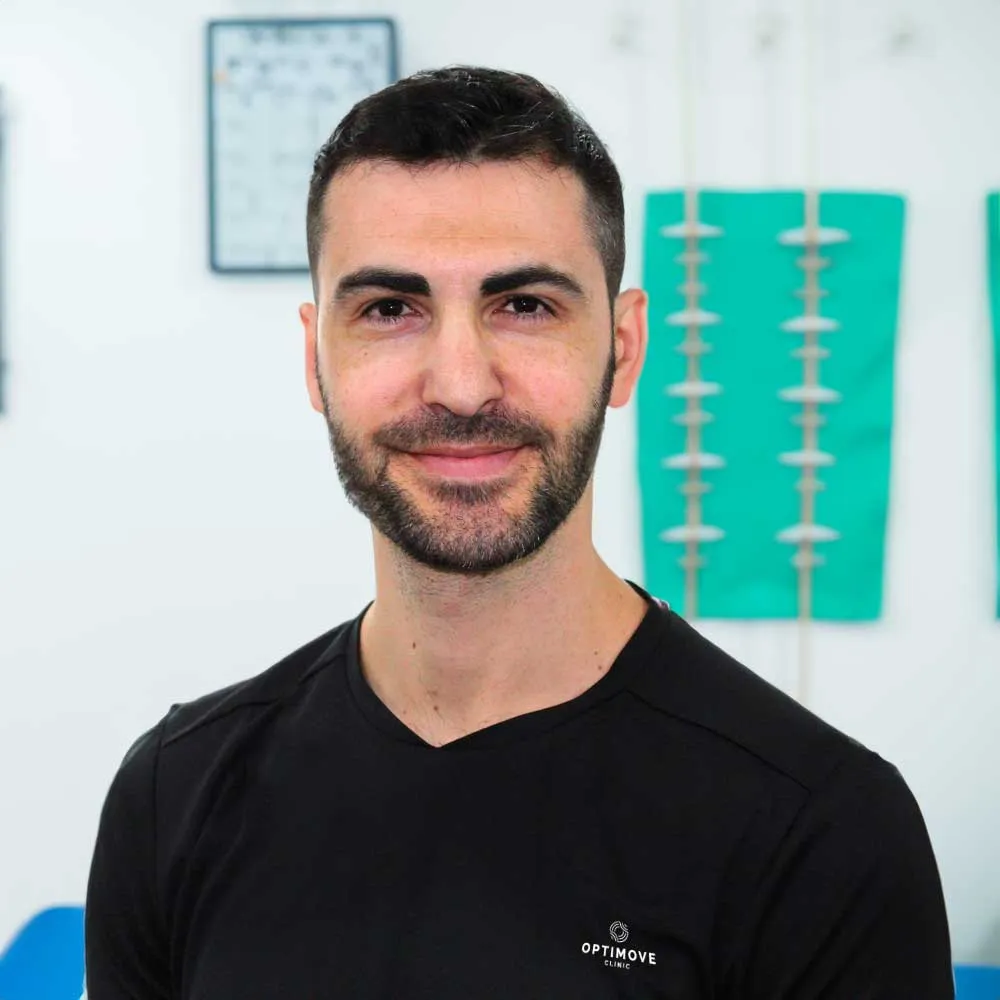
Adonis Angelides

Some Interventions we use

  • Soft tissue mobilisation and manipulation.
  • Trigger point therapy.
  • Vibration therapy.
  • Arthrokinematic optimisation (movement of joint surfaces)
  • Osteokinematics optimisation (gross movements of bones at joints).
  • Fascia and connective tissue treatment/ optimisation.
  • Neural Drive optimisation.
  • Muscle firing rate and synchronisation encasement. 
  • Inter and intramuscular coordination optimisation.

Other conditions that Optimove Clinic can help you with

We also offer treatments for other conditions, including neck pain and sciatic nerve pain. Learn more about how we can help you.