


📋 Content Verification
Written by: OPTIMOVE TEAM
Clinical Review: Dr Muhammad Tuseef
Specialisation: Advanced clinical practice
Aesthetics Practitioner Review: Elena Bodean – Head Practitioner, Skin Logic Aesthetics & Laser, London
Published: March 2026
Last Reviewed: March 2026
Next Review: June 2026
This article explores how posture, movement and Pilates influence facial appearance and complement aesthetic treatments.
Introduction
When people think about aesthetics, they often focus on skincare, injectables or laser treatments. While these play an important role in maintaining healthy, youthful skin, structural posture and muscular balance also influence how the face and neck appear over time.
At OptiMove Clinic in London, we frequently observe that posture, spinal alignment and movement patterns affect not only musculoskeletal health, but also aesthetic presentation. Increasingly, patients seeking aesthetic treatments are interested in natural, long-term strategies that complement in-clinic procedures.
💡 Clinical Insight: Pilates — particularly when delivered in a personalised, one-to-one setting — can support structural balance, reduce muscular tension and improve overall alignment. Aesthetics and movement are not separate disciplines; they are interconnected.
The Structural Foundation Behind Facial Appearance
The face sits on a structural base that includes:
- The cervical spine
- The thoracic spine
- The rib cage
- The shoulder girdle
Changes in spinal alignment influence how soft tissue rests over bone.
Postural Patterns and Their Effects
For example:
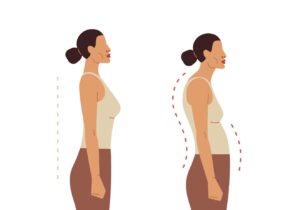
- Forward head posture increases submental fullness
- Rounded shoulders influence neck tension
- Thoracic stiffness affects jaw positioning
- Pelvic imbalance alters global alignment
Over time, these patterns may contribute to:
- Jaw tension
- Neck banding
- Reduced jawline definition
- Facial asymmetry
- Strain-related ageing lines
Important: Addressing posture through Pilates improves the structural support beneath the face.
Why Personalised Pilates Makes a Difference
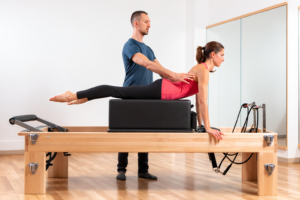
Pilates is widely available across London, but results vary depending on how precisely it is delivered.
While group classes offer general conditioning, personalised Pilates — particularly in a one-to-one format — allows for:
- Individual posture assessment
- Targeted muscle imbalance correction
- Alignment-focused movement retraining
- Controlled progression
- Continuous technique refinement
💡 Clinical Insight: Small deviations in spinal positioning can significantly influence neck tension and facial strain. A personalised approach allows exercises to be adapted to each individual’s structural needs.
At OptiMove Clinic in London, we offer 1-to-1 Pilates sessions tailored to posture correction, muscle balance and movement precision. This level of attention allows for more measurable and consistent outcomes.
The Neck, Jaw and Posture Connection
Many individuals seeking aesthetic treatments also experience:
- Jaw clenching
- Teeth grinding
- Neck tightness
- Tension headaches
- TMJ discomfort
Common Contributing Factors
These patterns are frequently linked to:
- Forward head posture
- Elevated shoulders
- Rib cage restriction
- Chronic muscular guarding
How Pilates Helps
Pilates can help restore:
- Deep neck muscle activation
- Scapular stability
- Thoracic mobility
- Balanced muscular support
Reducing chronic upper-body tension may soften strain-related facial lines and improve jawline positioning.
Posture and Perceived Ageing
Facial ageing is influenced by:
- Skin quality
- Volume changes
- Collagen reduction
- Bone structure
- Muscle tone
However, posture alters how gravity acts on facial structures.
Forward Head Positioning Increases
- Lower face heaviness
- Jawline softening
- Neck band prominence
- Double chin appearance
Important: Improving thoracic extension and cervical alignment through Pilates supports better structural positioning of the lower face and neck. For patients investing in aesthetic treatments in London, postural improvement may help maintain and enhance results.
Breathing, Stress and Facial Tension
Modern London lifestyles often involve prolonged desk work and high stress levels.
Shallow Chest Breathing Contributes To
- Overactive neck muscles
- Jaw clenching
- Elevated shoulder posture
- Increased facial tension
Pilates Breathing Patterns
Pilates incorporates controlled breathing patterns that:
- Improve rib mobility
- Reduce accessory muscle overuse
- Encourage nervous system balance
- Decrease chronic tension
💡 Clinical Insight: When facial muscles are less tense at rest, overall appearance may appear softer and more relaxed.
Whole-Body Alignment and Facial Symmetry
The body functions as an interconnected system.
A pelvic imbalance can affect:
- Rib positioning
- Shoulder height
- Neck alignment
- Head carriage
These changes may subtly influence facial symmetry.
Pilates Supports
- Global alignment
- Balanced muscle activation
- Reduced compensatory patterns
- Improved body awareness
When the body is more evenly aligned, facial positioning often appears more symmetrical and supported.
Pilates as a Complement to Aesthetic Treatments
It is important to clarify that Pilates does not replace aesthetic procedures.
What Pilates Cannot Do
- Restore lost dermal volume
- Replace injectables
- Eliminate established wrinkles
- Treat pigmentation
What Pilates Can Do
- Reduce tension-related facial strain
- Improve neck and jaw posture
- Support structural alignment
- Promote healthy ageing habits
- Enhance overall body confidence
Important: For many London patients, combining high-quality aesthetic treatments with structured Pilates offers a more comprehensive approach.
Who May Benefit Most?
Pilates may be particularly beneficial for:
- Professionals with prolonged desk posture
- Individuals experiencing jaw tension
- Clients seeking preventative ageing strategies
- Patients maintaining aesthetic treatment outcomes
- Anyone interested in improving posture and alignment
💡 Clinical Insight: In London, where sedentary working patterns are common, posture-related strain is increasingly visible.
A Collaborative Approach to Healthy Ageing
This article has been reviewed by Elena Bodean, Head Practitioner at Skin Logic Aesthetics & Laser in London, ensuring alignment between aesthetic practice and structural health principles.
By combining aesthetic expertise with movement-based support, patients can approach ageing with both surface-level and structural awareness.
Conclusion
Aesthetic appearance is influenced not only by skincare and injectables, but also by posture, muscle tone and movement habits.
Pilates supports spinal alignment, reduces upper-body tension and improves the structural foundation beneath the face and neck. While it does not replace aesthetic treatments, it complements them and supports long-term maintenance.
At OptiMove Clinic in London, we offer personalised 1-to-1 Pilates sessions designed to improve posture, alignment and movement precision — creating a strong structural base that supports both musculoskeletal health and aesthetic goals.
📌 Key Takeaways
- Posture and spinal alignment influence facial appearance and neck definition
- Forward head posture increases lower face heaviness and neck banding
- Personalised Pilates addresses muscle imbalances and structural alignment
- Combining Pilates with aesthetic treatments offers a comprehensive approach
- Improved breathing patterns reduce facial tension and jaw clenching
About OptiMove Clinic
OptiMove Clinic is a London-based physiotherapy and movement clinic specialising in posture correction, personalised Pilates and advanced musculoskeletal rehabilitation. We collaborate with aesthetic practitioners to support structural balance and long-term wellbeing.
This article is for educational purposes and does not replace personalised medical advice.